

How to Rank Your Business on Google in Lebanon in 2026
Learn how to rank your business on Google in Lebanon with practical SEO, local SEO, Google Business Profile, content and AI search strategies for 2026.
September 2026
SEO & Digital Growth
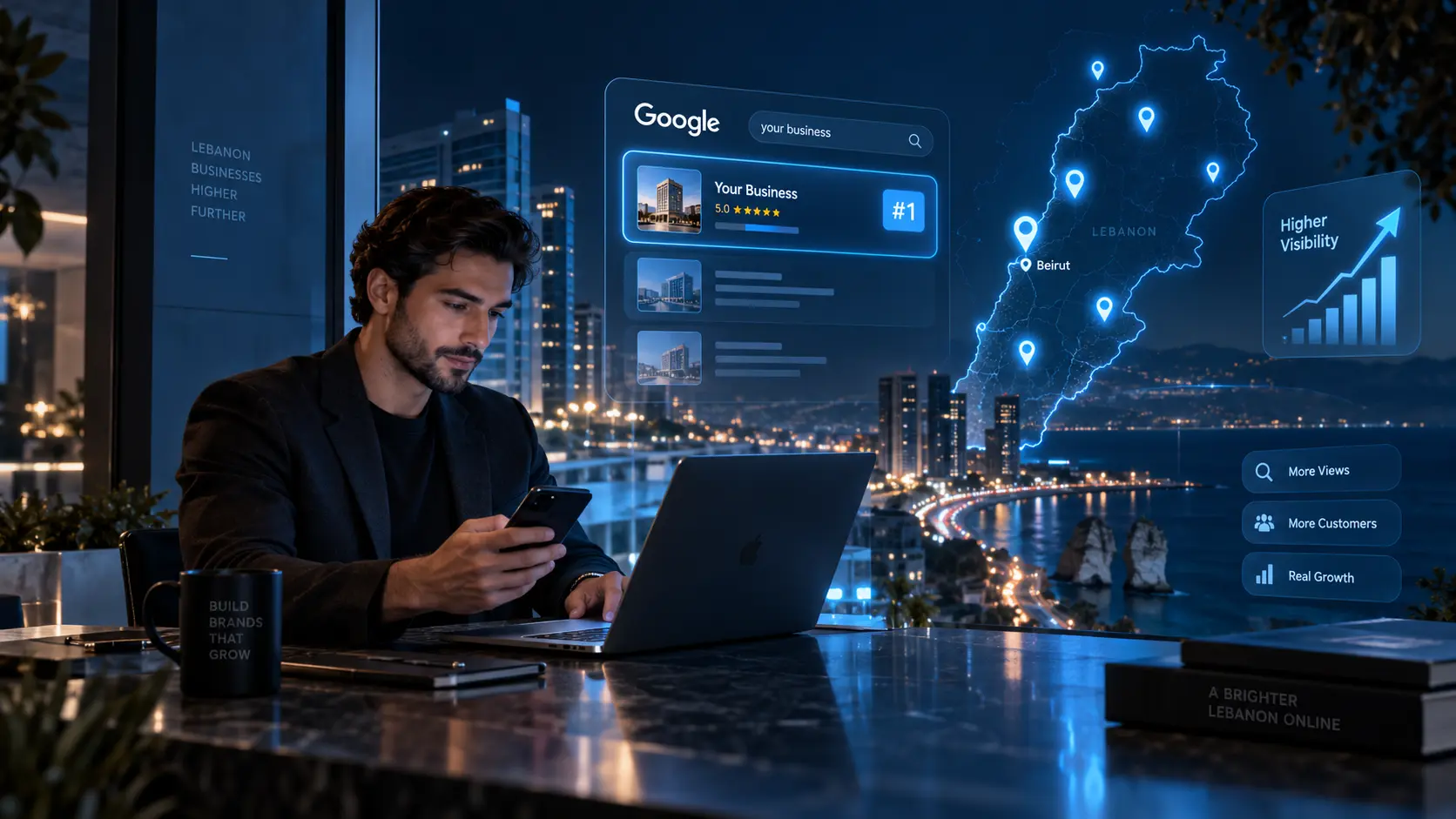
Getting your business on Google is easy. Getting it in front of the right people when they are actively searching for what you offer is a different story. For businesses in Lebanon, that might mean appearing when someone searches for “dentist in Beirut,” “restaurant near me,” “real estate agency in Lebanon,” “web design Lebanon,” or a specific service in areas such as Hazmieh, Jal El Dib, Antelias or Mar Mikhael. That visibility does not come from repeating keywords across your website or publishing dozens of generic blog posts. It comes from building a strong digital presence that makes it easy for Google — and potential customers — to understand who you are, what you offer and why your business is relevant. This guide explains the fundamentals of ranking a business on Google in Lebanon in 2026, from your website and Google Business Profile to local SEO, content, reviews and the growing role of AI-powered search.
What Does It Take to Rank on Google in Lebanon?
There is no single switch that moves a business to the top of Google.
Strong search visibility usually comes from several elements working together:
A fast, technically healthy website
Pages built around clear search intent
A properly optimized Google Business Profile
Accurate business information across the web
Useful, original content
Genuine customer reviews
Relevant backlinks and mentions
Strong internal linking
A good mobile experience
Consistent SEO work over time
For local search specifically, Google says results are primarily influenced by relevance, distance and prominence. Relevance is how closely your business matches the search, distance considers the searcher’s location, and prominence reflects how established and well-known the business appears online.
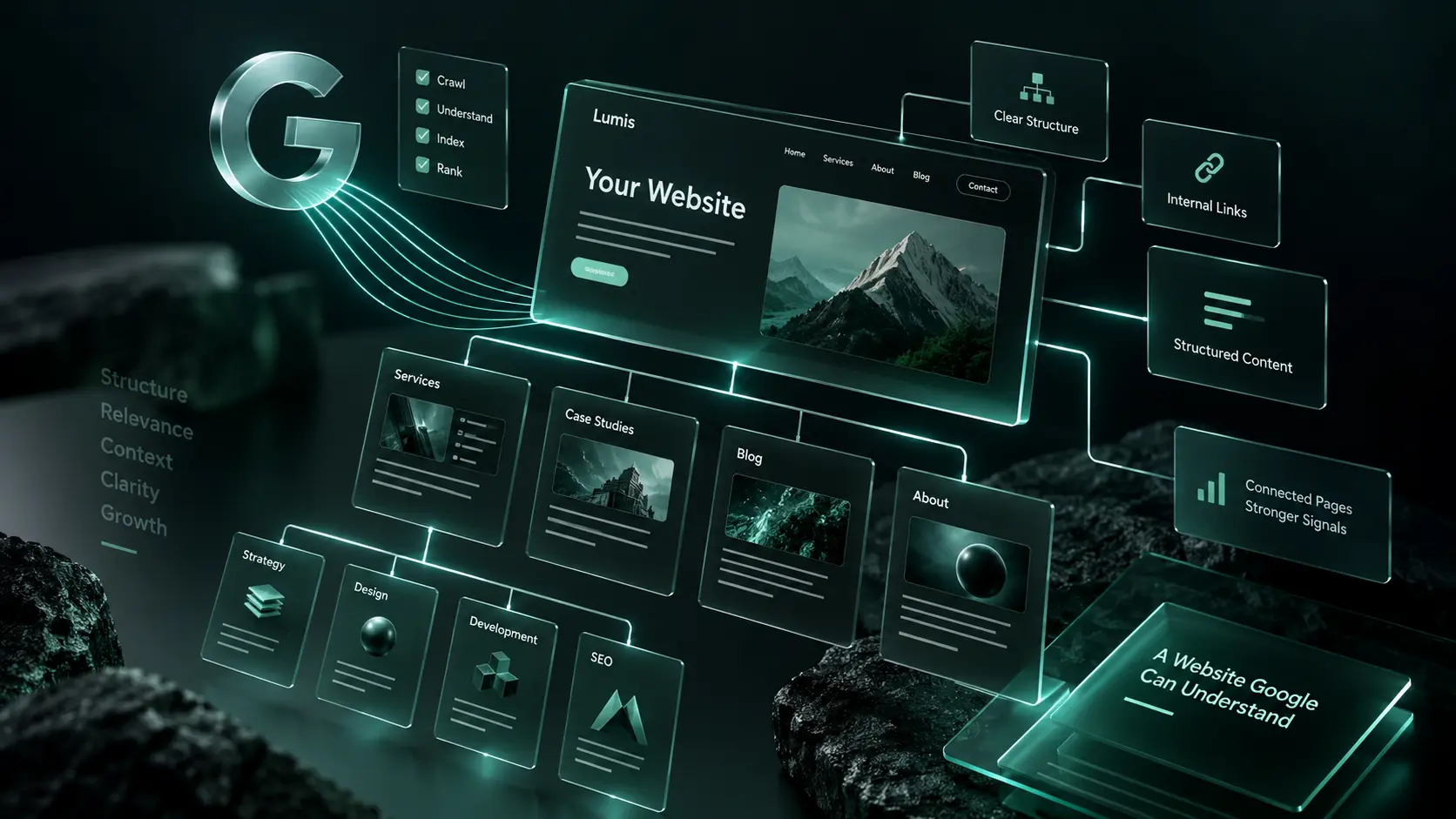
1. Start With a Website Google Can Actually Understand
SEO starts before the content.
A visually impressive website can still struggle in search if its structure is confusing, important pages cannot be crawled properly, the mobile experience is poor or Google cannot clearly understand what each page is about.
Every important service should have a clear purpose.
For example, a digital agency offering website development, branding and SEO should not try to rank one homepage for every possible service. Dedicated pages allow each service to answer a more specific search intent.
A strong website structure might look like:
Home → Services → Individual Service → Supporting Blog Articles → Contact
Your website should also have:
Clear page titles
Every important page should have a descriptive title that reflects what a potential customer is actually looking for.
“Web Development Lebanon | Lumis” is much clearer than something vague such as “Creating Digital Experiences.”
Creativity can live in your design and messaging. Your SEO elements should make the subject of the page obvious.
One clear topic per page
Avoid creating multiple nearly identical pages targeting slight variations of the same phrase.
A strong, complete page about web development in Lebanon is generally more useful than several thin pages separately targeting “web design Lebanon,” “website development Lebanon,” “Lebanon web agency” and similar variations.
Modern search engines are much better at understanding related language and context.
Logical headings
Use one main H1 for the page topic, followed by descriptive H2 and H3 sections.
Headings should help a person scan the page and immediately understand its structure.
Search-friendly URLs
Keep URLs short and descriptive.
A URL that clearly reflects the subject of the page is easier for both users and search engines to understand.
Strong internal links
Your pages should connect naturally.
For example, an article discussing website performance can link to your web development services, while an article discussing brand identity can link to your branding services.
Internal links help visitors continue exploring your website and help search engines understand how different pages relate to one another.
Google continues to recommend descriptive, useful internal linking as a fundamental SEO practice.
2. Optimize Your Google Business Profile
If you serve customers locally, your Google Business Profile is one of your most important digital assets.
It can help your business appear in Google Search and Google Maps when someone searches for a relevant service nearby.
Make sure your profile contains accurate and complete information, including:
Correct business name
Primary business category
Relevant secondary categories
Phone number
Website
Address or service area where appropriate
Opening hours
Business description
Services
Current photos and videos
Do not add keywords unnaturally to your official business name simply to rank.
Your Business Profile should accurately represent the real business.
Google specifically recommends complete and accurate business information, keeping hours updated, adding photos and responding to customer reviews.
3. Target the Searches Your Customers Actually Make
If you serve customers locally, your Google Business Profile is one of your most important digital assets.
It can help your business appear in Google Search and Google Maps when someone searches for a relevant service nearby.
Make sure your profile contains accurate and complete information, including:
Correct business name
Primary business category
Relevant secondary categories
Phone number
Website
Address or service area where appropriate
Opening hours
Business description
Services
Current photos and videos
Do not add keywords unnaturally to your official business name simply to rank.
Your Business Profile should accurately represent the real business.
Google specifically recommends complete and accurate business information, keeping hours updated, adding photos and responding to customer reviews.
Not Sure What You Need? We’ll Guide You From A to Z
Whether you need a website, stronger visibility, better branding, smarter marketing, or a complete digital solution, Lumis helps you figure out what actually makes sense for your business and takes it from idea to execution.
4. Build Separate Pages for Your Main Services
If you serve customers locally, your Google Business Profile is one of your most important digital assets.
It can help your business appear in Google Search and Google Maps when someone searches for a relevant service nearby.
Make sure your profile contains accurate and complete information, including:
Correct business name
Primary business category
Relevant secondary categories
Phone number
Website
Address or service area where appropriate
Opening hours
Business description
Services
Current photos and videos
Do not add keywords unnaturally to your official business name simply to rank.
Your Business Profile should accurately represent the real business.
Google specifically recommends complete and accurate business information, keeping hours updated, adding photos and responding to customer reviews.
5. Create Content Around Real Questions
Blogging can support SEO, but publishing content simply because “Google likes blogs” is the wrong approach.
Google does not need another generic article containing information that already exists on thousands of websites.
The strongest content answers a genuine question related to your expertise and provides enough useful information that the reader does not immediately need to search somewhere else.
That is why articles such as this one can support a broader SEO strategy.
Instead of publishing unrelated marketing content, build articles around topics your potential customers are already researching.
For a digital agency in Lebanon, useful topics could include:
How much does a website cost in Lebanon?
How long does SEO take in Lebanon?
What is local SEO?
Why is my business not appearing on Google Maps?
SEO vs GEO: what is the difference?
How can a restaurant get more Google reviews?
What should a business website include in 2026?
Each article should have a clear reason to exist and should naturally connect to a relevant service.
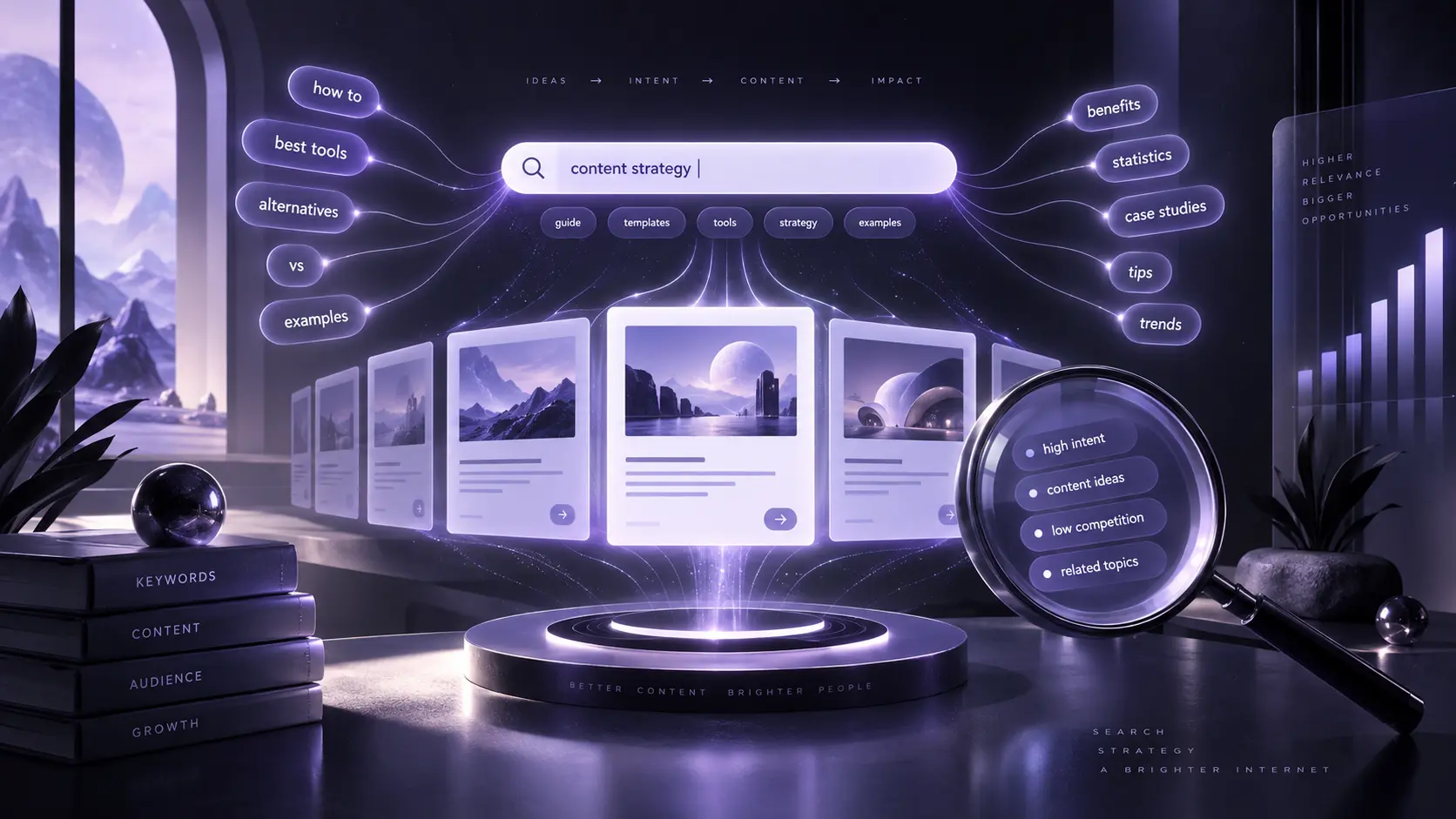
6. Make Your Content Useful Enough to Be Worth Ranking
SEO writing has changed considerably from the era of repeating the same keyword every few sentences.
Google's current guidance focuses heavily on helpful, reliable, people-first content.
That means content should be written because it solves a real problem for your audience — not because a tool told you that a particular phrase has search volume.
Strong content should:
Answer the main question early
Cover the subject thoroughly without unnecessary filler
Use clear sections
Include practical examples
Demonstrate genuine expertise
Avoid exaggerated claims
Use sources when factual claims need support
Be updated when the information genuinely changes
Give readers a logical next step
There is also no ideal SEO word count.
A 700-word article that completely answers a question can outperform a 2,500-word article filled with repetition. Google explicitly advises against writing to an arbitrary word count.
Quality comes from usefulness, not length.
7. Build Local Relevance Without Keyword Stuffing
If you want to rank in Lebanon, your website should make your connection to Lebanon obvious.
That does not mean writing “Lebanon” twenty times on every page.
Local relevance can come naturally through:
Your business location
Contact information
Google Business Profile
Service areas
Lebanese client work
Locally relevant content
Testimonials
Case studies
Local backlinks
Local publications
Business directories
Events and partnerships
Pages genuinely focused on the Lebanese market
For example:
“Lumis is a digital agency in Lebanon helping businesses improve their websites, branding and search visibility.”
That gives Google useful context.
A paragraph stuffed with variations such as “best SEO Lebanon agency Beirut SEO company Lebanon digital marketing Lebanon” does not.
Write for a human first.
8. Earn Genuine Google Reviews
Reviews matter for more than reputation.
They help potential customers decide whether your business looks credible and established, and Google states that review quantity and positive ratings can contribute to local prominence.
The best way to grow your reviews is simple: make leaving one easy.
Ask real customers at the right moment — ideally after a successful interaction — and give them a direct path to the review page.
Businesses can also use smart review tools that reduce the number of steps between the customer and the Google review form.
Never purchase fake reviews or manufacture customer experiences.
A smaller number of genuine reviews is far more valuable to your reputation than a profile full of questionable ones.
And when customers leave reviews, respond.
A professional response shows both existing and future customers that there is a real business behind the profile.
9. Strengthen Your Authority Beyond Your Own Website
Google does not evaluate your website in complete isolation.
Mentions and links from other credible websites can help search engines better understand your business and its authority.
For Lebanese businesses, relevant opportunities might include:
Local publications
Industry websites
Professional associations
Suppliers
Business partners
Event websites
Universities
Local directories
Interviews
Relevant blogs and media coverage
Quality matters significantly more than collecting hundreds of random links.
One genuinely relevant mention from a respected website can be more meaningful than dozens of low-quality directory links created purely for SEO.
Avoid services promising hundreds or thousands of backlinks overnight.
Good authority is usually earned through real business activity, useful resources, partnerships, PR, strong work and content worth referencing.
10. Pay Attention to Mobile Performance
A large percentage of local discovery happens from a phone.
Someone looking for a restaurant, clinic, agency, store or service provider is unlikely to patiently navigate a slow or broken mobile website.
Your site should:
Load quickly
Adapt properly to different screen sizes
Use readable text
Have simple navigation
Avoid overlapping elements
Keep important buttons easy to tap
Make calls, WhatsApp messages, bookings or enquiries straightforward
Technical performance and user experience should not be treated as separate from SEO.
If people find your website but struggle to use it, visibility alone has not solved the business problem.
Not Sure What You Need? We’ll Guide You From A to Z
Whether you need a website, stronger visibility, better branding, smarter marketing, or a complete digital solution, Lumis helps you figure out what actually makes sense for your business and takes it from idea to execution.
11. Use Search Console to Understand What Google Sees
Google Search Console should be connected to every serious business website.
It can help you understand:
Which searches generate impressions
Which pages receive clicks
Your average search positions
Which pages Google has indexed
Indexing problems
Sitemap status
Page experience issues
Changes in organic performance
Do not judge SEO by searching your own business repeatedly from your phone.
Search results can vary based on location, device, query and other contextual factors.
Search Console gives you much more useful performance data.
Use that information to improve pages that are already starting to appear rather than constantly rebuilding your entire website.


12. SEO Now Extends Into AI-Powered Search
Search is evolving.
Google increasingly integrates generative AI experiences such as AI Overviews and AI Mode into search, while users are also discovering brands through other AI-powered platforms.
This has led to terms such as GEO — Generative Engine Optimization and AEO — Answer Engine Optimization.
The important point is that businesses should not treat GEO as a collection of tricks designed to manipulate AI systems.
Google's current guidance says that its established SEO best practices remain relevant for generative AI search as well.
Content still needs to be crawlable, useful, well structured, trustworthy and easy to discover through internal links. Google has also emphasized original, non-commodity content rather than producing large amounts of generic material purely to capture variations of search queries.
For businesses, this means the strongest long-term strategy is increasingly clear:
Become a genuinely useful and credible source within your field.
13. Do You Need Schema Markup?
Structured data — commonly called schema markup — gives search engines additional machine-readable information about a page.
Depending on the page, this could describe:
Your organization
An article
A product
A service
A breadcrumb structure
Other supported content types
For a blog article, BlogPosting or Article structured data can help Google understand information such as the headline, author, publication date and images.
Schema does not automatically increase rankings.
Think of it as helping search engines understand your content more clearly rather than as a shortcut to position one.
14. How Long Does SEO Take in Lebanon?
There is no honest universal answer.
A new website targeting a competitive phrase may require considerably more time than an established business targeting a specific local search with weak competition.
Results depend on factors including:
Current website authority
Competition
Technical health
Content quality
Search intent
Location
Existing backlinks
Google Business Profile strength
Reviews
How consistently the strategy is executed
SEO should be viewed as a long-term acquisition channel rather than a quick advertising campaign.
Some improvements can affect visibility relatively quickly. Building sustainable organic authority usually takes considerably longer.
Be cautious of anyone guaranteeing a specific Google position or promising a #1 ranking within a fixed number of days.
Google itself states that there is no way to request or pay for a better local ranking.
Common SEO Mistakes Lebanese Businesses Should Avoid
A few mistakes repeatedly hold otherwise good websites back:
Building the website and never touching it again
Launching a website is the beginning of its search presence, not the end.
Trying to rank everything from the homepage
Create focused pages around important services and topics.
Publishing AI-generated articles without proper editing
AI can support research and workflows, but generic content with no experience, originality or editorial judgment adds very little value.
Obsessing over keywords
Use the terminology customers search for, but write naturally.
Ignoring Google Business Profile
For local businesses, the website and Business Profile should work together.
Buying backlinks
Authority cannot be sustainably manufactured through spam.
Creating dozens of thin location pages
Do not build near-identical pages for every Lebanese city simply to manipulate local searches. Create location-focused pages only when they genuinely serve a different audience or contain meaningful local information.
Ignoring mobile users
A website that only looks good on a designer's desktop is not finished.
A Simple SEO Checklist for Businesses in Lebanon
Before worrying about advanced tactics, make sure the fundamentals are covered:
Google can crawl and index the website
Search Console is connected
A sitemap is submitted
Important pages have unique titles and descriptions
Each service has a clear page
Heading structure is logical
The website works properly on mobile
Images are optimized
Internal links connect related pages
Google Business Profile is complete
Business information is consistent
Customers can leave reviews easily
Useful content is published regularly
Relevant backlinks and mentions are being earned
Performance is measured rather than guessed
Getting these fundamentals right will usually create a stronger foundation than chasing the latest supposed SEO “hack.”
Final Thoughts: Ranking Is About Becoming the Best Result
The goal of SEO is not simply to convince Google that your business deserves visibility.
The goal is to build a digital presence that genuinely deserves to be shown to someone searching for what you provide.
For businesses in Lebanon, that means combining a strong website, clear service pages, local SEO, useful content, reviews, authority and a professional brand experience.
SEO is becoming more sophisticated, particularly as traditional search and AI-powered discovery begin to overlap. But the underlying principle remains surprisingly simple:
Make your business easy to understand, easy to trust and easy to choose.
Lumis helps businesses build that complete digital presence through web design and development, SEO, GEO, branding, digital marketing and smart growth solutions.
If your business is struggling to appear on Google, relying entirely on social media or simply unsure what is holding its online presence back, contact Lumis for a digital visibility review.
We’ll identify what is working, what is missing and where the strongest opportunities are to improve your visibility.
Frequently Asked Questions
Not sure what your brand needs? Tell us about your business, goals and current digital presence. We’ll help you identify the right approach for your goals
How can I rank my business on Google in Lebanon?
Start with a technically strong website, create focused pages around the services customers search for, optimize your Google Business Profile, collect genuine reviews, publish useful content and build credible mentions and backlinks. Local search visibility also depends on relevance, distance and prominence.
Is SEO worth it for small businesses in Lebanon?
SEO can be particularly valuable for businesses whose customers actively search Google before buying, booking or contacting a provider. This includes restaurants, clinics, professional services, real estate companies, hospitality businesses, automotive companies and many other local businesses.
Do I need a Google Business Profile to rank locally?
Businesses serving local customers should generally maintain an accurate Google Business Profile. It gives Google additional information about the business and can make the company eligible to appear across relevant local Google Search and Maps experiences.
How often should I publish blog posts for SEO?
There is no ideal publishing frequency. One genuinely useful article is more valuable than several rushed articles produced simply to maintain a schedule. Publish when you have a relevant question, subject or insight worth covering properly.
Does AI-generated content hurt SEO?
Using AI does not automatically prevent content from performing. The important issue is quality and purpose. Content should be accurate, original, useful and created for people rather than mass-produced primarily to manipulate search rankings.
What is GEO?
GEO stands for Generative Engine Optimization. It generally refers to improving a brand's visibility within AI-powered search and generative experiences. In practice, many of the strongest GEO fundamentals overlap with good SEO: clear information, crawlable pages, trustworthy content, authority and strong website structure.
Can anyone guarantee a #1 Google ranking?
No credible agency can guarantee a permanent #1 organic position. Search results depend on many factors, including competition, relevance, location, authority and ongoing changes to search systems.

